PROJECTS
Shading neighborhoods to adapt to a hotter climate
I co-founded ShadeLA in 2025 with my collaborator Monica Dean — a campaign with the goal to bring more natural and built shade to LA County by leveraging the attention and investments coming in advance of the 2028 Olympic and Paralympic Games. Co-led by USC Public Exchange and UCLA Luskin Center for Innovation and launched in July 2025, our official campaign participants include the City of LA, LA County Chief Sustainability Office, LA Metro and the LA Organizing Committee for the 2028 Games (LA28), plus over a dozen non-governmental organizations, design firms, and other partners. Research is a major work stream and includes the following areas (each with distinct projects under it): Planning and mapping; Permitting and policy; Urban design; and Public engagement. ShadeLA has been written about in the LA Times, Torched, and featured in NBC News and other outlets. An LA City Council Motion formalizing the City’s relationship with ShadeLA was passed in late 2025, building on the Mayor's commitment and authorizing the City to expand, maintain, and fast-track both shade projects.
Learn more and get involved at ShadeLA’s website.

Rx for hot cities: Climate resilience through urban greening and cooling
Extreme heat causes more deaths in the United States than all other weather-related causes combined. In Los Angeles, the groups expected to see the largest increases in mortality as the climate warms are elderly, Black , and Latinx communities.
To address this, Dr. Larry Kalkstein and I co-founded the Los Angeles Urban Cooling Collaborative, a multi-disciplinary, national partnership of researchers and expert practitioners working with communities, nonprofit organizations, academia, and government toward the goal of understanding and implementing urban cooling strategies.
Our research found that roughly one in four lives currently lost during heat waves could be saved, largely in low-income communities and communities of color. We also found that climate change-induced warming could be delayed approximately 25 to 60 years under business-as-usual and moderate mitigation scenarios, respectively. Project funded by the USDA Forest Service and Harvard-Westlake School.

Closing the urban forest equity gap in Los Angeles
The systemic lack of green spaces in lower income communities and communities of color links to disproportionate exposure to extreme heat, poor air quality, and related public health risks. In many neighborhoods, race-based historical planning decisions invested in parks and street trees within whiter and wealthier areas, creating environmental injustices elsewhere in the city.
Working closely with City Plants and CAPA Strategies, in 2020 we co-founded the LA Urban Forest Equity Collective, with funding from Accelerate Resilience Los Angeles, the LA Center for Urban Natural Resources Sustainability, and the US Forest Service. We are assessing urban forest equity conditions, developing a tiered planting process to create a pathway for planting in densely-populated neighborhoods that have limited space, and developing a framework to dismantle the physical, political, and social barriers that perpetuate urban forest inequity.
Check out the equity assessment report, design guidebook, and infographic from phase 1.

Greening plan for Inglewood & Lennox
Working closely with Social Justice Learning Institute, over four years our small but mighty team facilitated participants representing dozens of community, government, and nonprofit entities to develop a collective vision and set of goals to advance environmental and social justice in Inglewood and Lennox.
We focused on creating an intentional, replicable model by using non-traditional planning processes grounded in non-hierarchical communication practices. What emerged was a comprehensive and actionable community vision that will help protect and enhance the urban forest, urban cooling, air and water quality, and local water supply to make these communities resilient to climate change.
Read the Vibrant Cities Lab case study about the greening plan.
Engaging audiences in environmental action through art
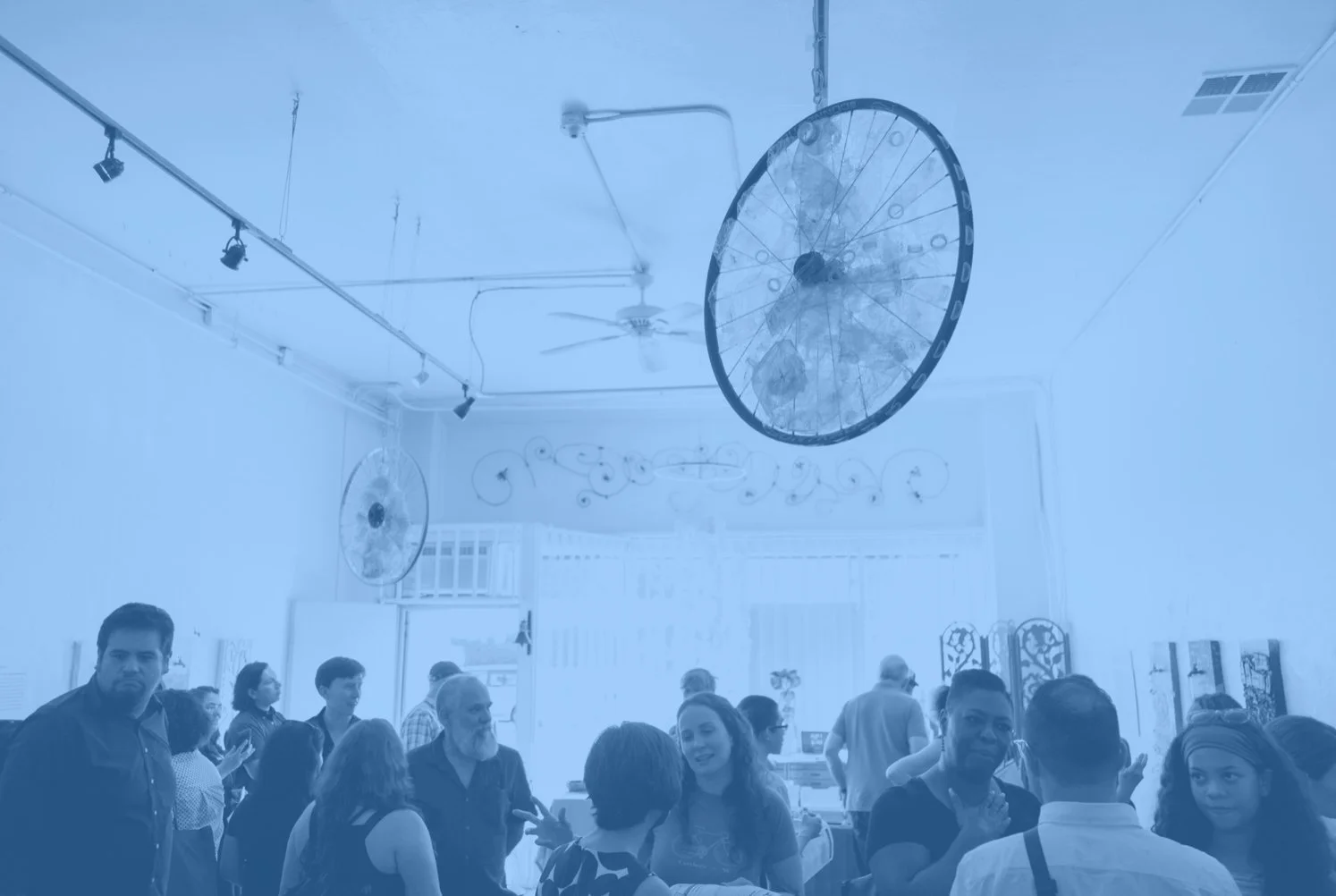
Since 2022, I’ve been curating science-based art exhibitions alongside my husband, Jolly de Guzman. Exhibition themes have included water, climate change, fire, and shade equity, and each is presented with nonprofit, academic, and advocacy partners and designed to raise awareness and invite visitors to take action. In 2024, we curated What’s On Tap: L.A.’s Water Story…Source to Spigot, tackling five water challenges Southern California communities contend with: local water and groundwater; imported water; human right to water; tap water (dis)trust; and affordability. Fourteen artists each used a wood panel with a spigot installed on it as their “canvas” and responded to prompts corresponding to these water issues. In 2025, we curated, Roots of Cool: A Celebration of Trees and Shade in a Warming World – exhibition on shade equity that was on view in the summer and early fall of 2025 at Descanso Gardens. Tens of thousands of visitors interacted with the exhibit during its three-month run, including conveying their visions, sentiments and concerns related to a hotter climate by responding to prompts in words and in drawing.
View the Roots of Cool catalogue and the LA Times article on the exhibit.

Fostering tree stewardship and community resilience
Providing establishment-period care to young trees is a challenge to increasing urban forest equity -- particularly in arid and semi-arid regions like Los Angeles. This study sought to produce a replicable approach to engaging residents in environmental justice communities to actively care for young street trees planted in front of their homes. Using Community-Based Social Marketing in the community of Huntington Park (Los Angeles County, California), we investigated socioeconomic and cultural characteristics to barriers and motivators around tree stewardship and developed an outreach program strategy accordingly. We then pilot-tested and evaluated the program for effectiveness in changing behavior, testing active, in-person engagement against more passive outreach, where program materials were left at the doorstep. Project funded by the L.A. Center for Urban Natural Resources Sustainability.
Building off of this project, we are expanding the research scope into the City of San Fernando to determine whether environmental stewardship programs can be an effective portal to increase heat-risk awareness and boost community resilience to a variety of stressors. Project funded by the California Department of Forestry and Fire Protection.
Read the article in the Journal of Arboriculture and Urban Forestry.

Stormwater solutions for Los Angeles
The City of Los Angeles’ first-ever Stormwater Capture Master Plan looks at existing stormwater capture and quantifies how to maximize its potential as a way to reduce reliance on imported water. The Plan process was initiated by my TreePeople colleague Deborah Bloome, and she and I served as advisors to the Los Angeles Department of Water and Power staff and consultants at Geosyntec — an unusual role for an NGO representative to play. We used research-based advocacy to ensure inclusion of progressive targets and approaches, helping create a more ambitious and sustainable vision for LA’s water future that prioritizes local sources.
To demonstrate what this water future might take shape, our TreePeople team founded and facilitated the Greater LA Water Collaborative — a collaborative governance partnership among LADWP, LA City Bureau of Sanitation, and the LA County Department of Public works. We co-designed and retrofitted pilot homes with large rainwater cisterns and rain gardens to demonstrate how Angelenos can secure a climate-resilient future by capturing stormwater at home. This project, dubbed StormCatcher, features high-tech rainwater management systems equipped with cloud-based monitoring and controls to optimize system performance in real time.
Read more about the Stormwater Capture Master Plan.
Read more about the Greater LA Water Collaborative and the StormCatcher project.
Urban wildfire research, preparedness and recovery
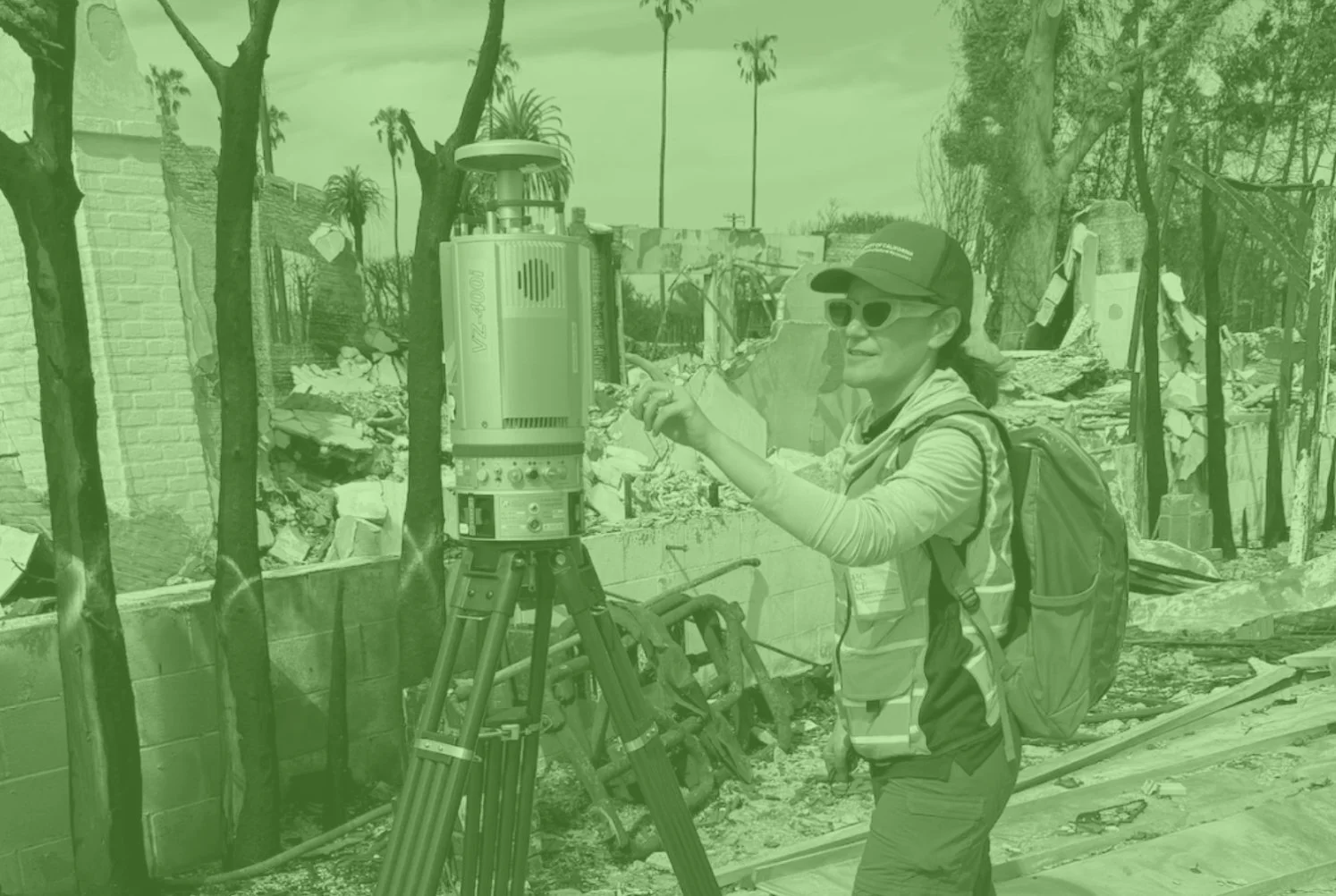
The devastation caused by the January 2025 fires in Los Angeles has left many unanswered questions as communities face the daunting task of rebuilding in an era of climate change that pushes wildfires increasingly into urban areas. The need to provide scientific and policy grounding toward resilience and recovery solutions became immediately evident in the hours and days following the start of firest — including engaging with media and mobilizing to conduct research on why the fires were so destructive, what the role of climate change is in changing fire risk, how water supply systems work and their role in firefighting, and what the dynamics are between fires and urban vegetation . With UCLA and other colleagues, I co-developed collaborative research and extension to advance knowledge, evaluate conditions, contribute new wildfire preparedness and response approaches, and improve outcomes in future fires around two areas in particular: 1) Dynamics between urban forests and urban conflagrations; and 2) Dynamics between water supply and urban conflagrations. This work is ongoing.
See updates about my and my colleagues’ work at the UCLA Luskin Center for Innovation Fire Hub.

Evaluating impacts of trees on residential thermal conditions using community science
Heat-health risk can be mitigated by trees, but there are critical gaps in knowledge that Dr. Alan Barreca and I investigated through an empirical study funded by Accelerate Resilience L.A. We engaged residents in southeast Los Angeles County to host sensors in their homes during the COVID-19 pandemic. Participants contributed continuous half-hourly readings for indoor (bedroom and living room) and outdoor (eave) temperatures for a period of 11 weeks, including the hottest day ever recorded in Los Angeles County.
On average, we found that indoor temperatures in treehouses warm 1.1°F less on hot days compared to non-treehouses. If homes in heat-vulnerable parts of Los Angeles were 1°F cooler we could reduce heat-related deaths by 10-20%, and with additional tree canopy and solar reflectance increases the number of lives saved could grow to 30% or more. However, we also find that trees provide relatively less benefit at night, a finding that is consistent with other studies but warrants further investigation for its potential impact on public health.

Tree canopy assessment and map viewer for Los Angeles County
Managing the urban forest requires accurate spatial data — data which has long been unavailable for our region. In partnership with Dr. Michele Romolini and the Center for Urban Resilience (Loyola Marymount University), this project produced a LiDAR-based high-resolution assessment of L.A. County’s existing and potential tree canopy cover. Our team engaged the Consulting Group at SavATree and the University of Vermont Spatial Analysis Lab to help us look at the spatial distribution of green infrastructure in Los Angeles.
Using these data, and in collaboration with Dr. Shenyue Jia at the Center of Excellence in Earth Systems Modeling and Observations (Chapman University), we built a basic interactive viewer showing existing and possible tree canopy cover, and an advanced viewer showing detailed land cover maps at multiple scales.
Explore the tree canopy assessment report, presentations, and videos.

Transferring lessons to California from Australia’s Millennium Drought
Southern California and Southern Australia are two regions of the world which share many climatic, socioeconomic and demographic characteristics that lend themselves to meaningful exchanges of knowledge and innovations. With the benefit of Australia’s documented experiences, California can learn what solutions worked and did not work in Australia, potentially avoiding major pitfalls.
I co-led two study tours to Australia in 2012, meeting with water management and planning entities in Australia’s five largest cities. Based on this research, in 2014, TreePeople and The Energy Coalition co-organized and led a delegation of policymakers and elected officials from California to Melbourne and Adelaide. The delegation produced changes in the regulation of non-potable water and in planning for extreme heat mitigation in Los Angeles.